


.svg)
How to Choose the Right PCOS multivitamin (+ Best PCOS Multivitamins)
The best multivitamins to manage PCOS symptoms, based on the latest medical research.
If you have PCOS, the odds are you’re running low on key vitamins.
Research suggests that women with PCOS may lack calcium, potassium, magnesium , folic acid, vitamin C, and vitamin B12.
Not getting enough vitamins will manifest in a couple of different ways. Irregular periods, anxiety, high insulin levels, and increased weight gain are all signs your body may be missing one or more vitamins. I’ve lived through a lot of these symptoms and my specific deficiencies have been confirmed through blood tests.
I’ve tried to fix this shortfall through a combination of diet and PCOS multivitamins. While there is no cure for PCOS, I’ve found adopting a healthy diet and supplementing with the right vitamins does provide relief from most of my symptoms.
The benefit of a multivitamin is that you get a dose of multiple nutrients in a single pill. Depending on your specific makeup, this might be much easier than taking multiple pills throughout the day. I actually found a lot of the nutrients I specifically required in a prenatal vitamin supplement, including inositol. Outside of this, my doctor just had me supplement with iron since I was anemic at one stage.
But there’s a lot of noise out there about the right approach to vitamins. Below, we look at the factors you need to keep in mind when selecting the best PCOS multivitamin for your needs.
How to find the best multivitamin for PCOS
The market for women’s multivitamins is huge, worth an estimated $53 billion. On the plus side, this means you have a whole host of options. But sorting through all those choices is overwhelming. Ahead, we outline a few simple to help you choose the right multivitamin supplement for you.
Understand the most common vitamin deficiencies in PCOS
There is well-established research linking PCOS to specific nutritional deficiencies. Studies show that women with PCOS face the highest risk of deficiency in calcium, potassium, and magnesium, and that up to 70% are at risk of insufficient folic acid intake. The main nutrients to be aware of are:
- Magnesium: According to research published in Gynecological Endocrinology, women with PCOS are 19 times more likely to have a magnesium deficiency than those without. A systematic review and meta-analysis pooling data from over 2,000 women confirmed significantly lower serum magnesium levels in women with PCOS compared to controls.
- Vitamin D: One study found vitamin D deficiency in over 40% of PCOS patients, compared to 24% of controls, with lower levels particularly pronounced in those with insulin resistance or obesity. Further research shows correlations between vitamin D status and insulin sensitivity, HDL cholesterol, and inflammatory markers in women with PCOS.
- Calcium: A case-control study of 103 women with PCOS found significantly lower calcium concentrations compared to healthy controls, with strong correlations between calcium levels and key metabolic markers
- B vitamins: A review of the evidence found strong support for a beneficial effect of B vitamins — particularly folate and B12 — on fertility, with effects potentially more pronounced in women with menstrual cycle dysfunction, a hallmark symptom of PCOS.
Beyond vitamins, certain compounds have a growing body of evidence behind them for hormone health and PCOS specifically.
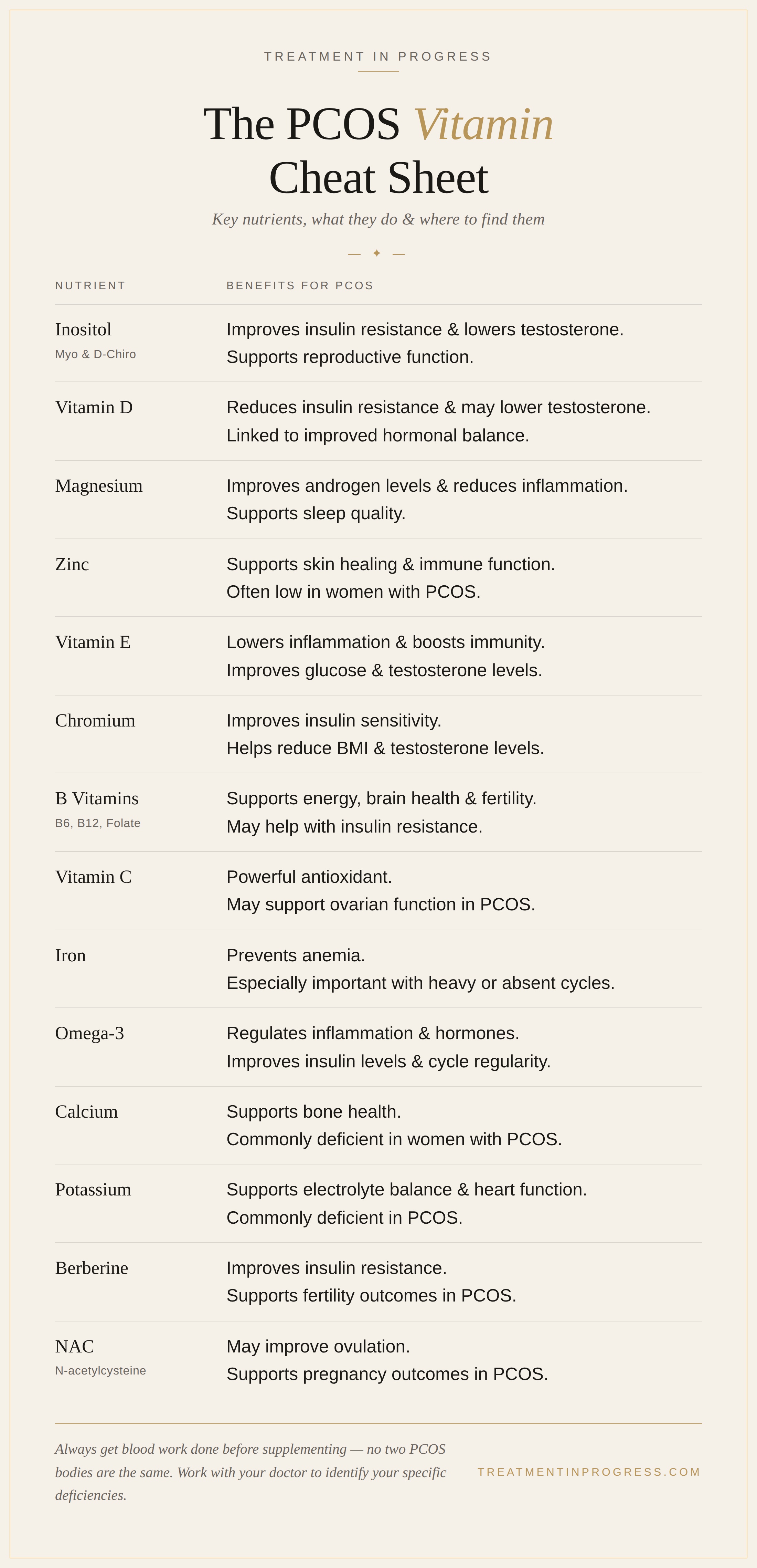
Inositol (myo-inositol and D-chiro-inositol) is among the most researched. A systematic review and meta-analysis of 26 randomised controlled trials found that women taking inositol were 1.79 times more likely to have a regular menstrual cycle than those on placebo, with significant reductions in testosterone, glucose, and insulin levels. Berberine also has a compelling evidence base. A systematic review found berberine to be more effective than metformin for improving insulin resistance, cholesterol levels, and androgen levels in women with PCOS, and further research highlights its potential for improving fertility outcomes in women with PCOS-related insulin resistance.
Check your vitamin deficiencies
Blood tests offer concrete data on your nutritional deficiencies. I cannot stress this enough: get your own blood work done before you start supplementing with vitamins you may not even need.
We know a PCOS diagnosis is linked with inadequate levels of key vitamins BUT no PCOS body is the same. For example, some women with PCOS report high levels of iron but low iron levels were particularly uncommon among women with PCOS who had amenorrhea, which is when you don’t get a period for three months or more. Personally, I had low iron levels during pregnancy but after supplementing and retesting, my levels went back to normal.
There’s no blanket approach to which vitamins and what dosage is right for you. Tests pinpoint exactly which vitamins you need. Reach out to your doctor to run a few tests to gain a clearer picture of your own deficiencies. Based on the results, your provider can recommend a personalised PCOS management plan, which will likely include vitamins and diet. Test after a few months to monitor your progress.
Complement with PCOS nutrition
Even the most comprehensive multivitamin can’t compensate for a poor diet. Adopting a healthy PCOS diet is one of the proven ways to manage this hormonal disorder.
Renaming PCOS to polyendocrine metabolic ovarian syndrome (PMOS) highlights that what we’re experiencing is metabolic. And this means that diet is one lever to improve metabolic problems like insulin resistance, which is at the heart of so many of our symptoms.
As Aaron Kassebaum, PharmD, pharmacist, tells the Nebraska Medicine University Health Center:
“Multivitamins are a great supplement to your diet, but they should never be a substitute for a healthy, balanced diet. It’s best to get your nutrients from whole foods like lean meats, fruits and vegetables when possible.”
Scientists have spent decades studying the best eating habits for PCOS. Generally, eating a diet low in processed foods and added sugar will help control your symptoms. That’s because solid PCOS nutrition keeps your insulin and blood sugar levels in check. Small improvements in insulin levels can lead to more regular cycles and weight loss.
Once I limited my carb and processed food intake and started eating more fresh fruits and vegetables, I saw a major improvement in my PCOS symptoms. Most noticeably, my skin cleared up right away and my periods became regular. This change came after years of frequent acne outbreaks and irregular menstrual cycles. Still today, years later, my skin and my cycle tell me when something’s wrong with my diet.
Specific recommended diets for PCOS include:
Finally, when choosing a multivitamin, watch out for synthetic fillers and artificial dyes like Red 40, which can trigger inflammation. Be particularly cautious with iron: unless you've been diagnosed with iron-deficiency anaemia, avoid high-dose iron supplements. Heavy or irregular periods can make iron seem like an obvious fix, but some women with PCOS have iron-processing issues, so remember to always test first.
Two common medications also affect your nutritional needs in ways worth knowing. If you take Metformin, your risk of B12 deficiency is significantly higher.If you're on the pill, oral contraceptives are known to deplete folate, magnesium, and zinc, making those nutrients especially important to replenish. Remember not to overlook third-party testing: labels marked NSF Certified or USP Verified are your assurance that what's on the bottle is actually in the pill.
5 best multivitamins for PCOS
Choose a multivitamin that’s designed for your specific requirements, recommends the National Institutes of Health (NIH) Office of Dietary Supplements.
A PCOS supplement will differ from regular multivitamins. For example, you’ll see more of a focus on hormone balance and blood sugar control. Below, you’ll learn the top multivitamins for PCOS, based on research and expert advice:
1. Prenatal vitamins with with Myo-Inositol & D-Chiro Inositol
One of the benefits of a multivitamin is that you get a bunch of nutrients in a single capsule. I started taking a prenatal vitamin supplement with Inositol during my third pregnancy and it became my go to afterwards because it solved my personal deficiencies.
Any good PCOS PCOS will likely contain inositol, a type of sugar alcohol that is naturally found in fruits, grains, and nuts. And it’s also been shown to relieve PCOS symptoms.
Studies have found that inositol can help improve insulin resistance, reduce testosterone levels, and regulate menstrual cycles. When it comes to PCOS, animal studies found inositol can help with reproductive function.
This Gummy for Women’s Fertility actually contains a lot of key PCOS vitamins, like inositol. Theralogix 's another well-known brand and their products are third-party tested. TheraNatal OvaVite Preconception Vitamins contains magnesium, vitamin D, vitamin C, and chromium.
2. Women’s health vitamins
General women’s health vitamins contain several essential nutrients.
OLLY Ultra Strength Women's Multi Softgels is one of these. Aside from Inostiol, it also contains Vitamin D.
Worryingly, the PCOS population is at a higher risk for a vitamin D deficiency, according to research published in the Journal of Clinical Medicine. And this deficiency can lead to insulin resistance, diabetes, and hirsutism. Taking vitamin D can ward off serious PCOS-related health problems. A systematic review found vitamin D was linked with improved metabolic health in PCOS. Another paper published in the 2023 Annals of Medicine and Surgery found vitamin D may lower testosterone levels and regulate menstrual cycles. Bottom line, any PCOS multivitamin must contain vitamin D.
Like most women with PCOS, I was deficient in vitamin D. After confirming that low levels of vitamin D through blood tests I started supplementing to bring them back up. I always notice a huge upswing in my overall well being once I bring my vitamin D levels back into balance.
Olly’s multivitamin also contains vitamin E and Chromium.
Taking vitamin E may lower inflammation and boost immune health. According to the research published in the 2022 Gynecological Endocrinology journal, vitamin E supplementation is tied to better levels of glucose and testosterone in women with PCOS.
Chromium is a mineral that is involved in glucose metabolism and insulin signaling. A systematic review and meta-analysis found that chromium supplementation can help improve insulin sensitivity, reduce body mass index, and lower testosterone.
3. One a day multivitamins
Some one a day multivitamins contain many crucial PCOS vitamins. For example, New Chapter Women’s Multivitamin, is a source of Iron, B6, B12, and Zinc.
Your body needs B vitamins for a whole range of functions, including energy production and brain health. For PCOS, researchers believe B vitamins can boost fertility but more evidence is needed. Some evidence suggests low B vitamin levels are linked to insulin resistance.
Like most one a day vitamins, this one also comes with vitamin C, a powerful antioxidant.An animal study suggests that vitamin C helps with ovarian function in PCOS.
4. PCOS multivitamins containing magnesium
Wholesome Story’s 3-in-1 supplement contains magnesium glycinate, the most absorbable form of magnesium. Marketed specifically as a hormone balancing supplement, this multivitamin holds a 4.6 rating on Amazon. A few of the reviewers specifically call out its benefits for PCOS. Whenever I have trouble sleeping, I turn to magnesium and after taking it consistently (and implementing better sleep hygiene like reducing my screen time before bed) I notice huge improvements in my sleep.
Magnesium supplementation is critical for PCOS. Research suggests a connection between PCOS and low magnesium levels. More specifically, a 2021 research analysis found declined magnesium levels were associated with increased male hormones and insulin resistance.
Conversely, magnesium supplements may improve androgen levels and inflammation, per the Metabolites journal.
Zinc plays a role in preventing colds, healing skin injuries, and increasing cognitive function. While most people get enough zinc through diet, women with PCOS may need to supplement to meet the recommended dosage. A meta-analysis published in the Journal of Trace Elements in Medicine and Biology found women with PCOS have lower levels of zinc compared to those without.
5. Hormone health blends
Hormone blends often cover all the vitamins you need to target PCOS specific deficiencies.
The Peach Perfect Inositol Multivitamin has all the key ingredients, like inositol, vitamin D, and zinc.
Also included are omega-3 fatty acids. These essential fatty acids are important for inflammation regulation and hormone balance. They have also been shown to offer benefits for PCOS. According to a paper published in the Reproductive Biology and Endocrinology journal, omega-3 fatty acid supplementation can help improve insulin levels among the PCOS population. That’s not all: results from clinical trials suggest omega-3 fatty acids can also improve menstrual regularity.
Carbamide Forte’s Myo Inositol & D Chiro Inositol supplement markets itself as a hormone balance vitamin, with a focus on PCOS. It also contains berberine, a natural compound that is found in several plants. One research review suggests that berberine improves insulin resistance and fertility.
Use a multivitamin to improve your PCOS management
This isn’t an exhaustive list, and there are many other vitamins and minerals that have benefits for PCOS. For instance, N-acetylcysteine (NAC) is an amino acid that may help with ovulation and pregnancy in PCOS.
The key is to take note of your specific problem areas and have them tested regularly. Keeping track of your levels lets you know what's working and what’s not. You’ll be able to make changes to your diet or vitamin schedule based on your results.
The best PCOS supplements can boost insulin sensitivity, promote healthy blood sugar levels, and reduce oxidative stress. In short, it can fix many of the most troubling PCOS symptoms.

